Original item bank
All 48 statements and every result description were written for PersonaQuiz. We do not copy the official MBTI instrument or 16Personalities content.
PERSONALITY · FOUR PREFERENCES
Explore how you tend to recharge, notice information, make decisions, and organize daily life. Your result shows a preference—not a box you have to stay in.
WHY THIS TEST
All 48 statements and every result description were written for PersonaQuiz. We do not copy the official MBTI instrument or 16Personalities content.
You get percentages for both sides of every dimension, including a boundary note when your preference is close.
Version one does not upload or collect your individual answers. Progress is stored only on your device.
THE MODEL
Each pair describes two useful styles. One side is not better, smarter, or healthier than the other.
Extraverted ↔ Introverted
Sensing ↔ Intuitive
Thinking ↔ Feeling
Judging ↔ Perceiving
RESULT LIBRARY
These are PersonaQuiz’s original, plain-language portraits. They describe likely tendencies, not fixed abilities or destiny.
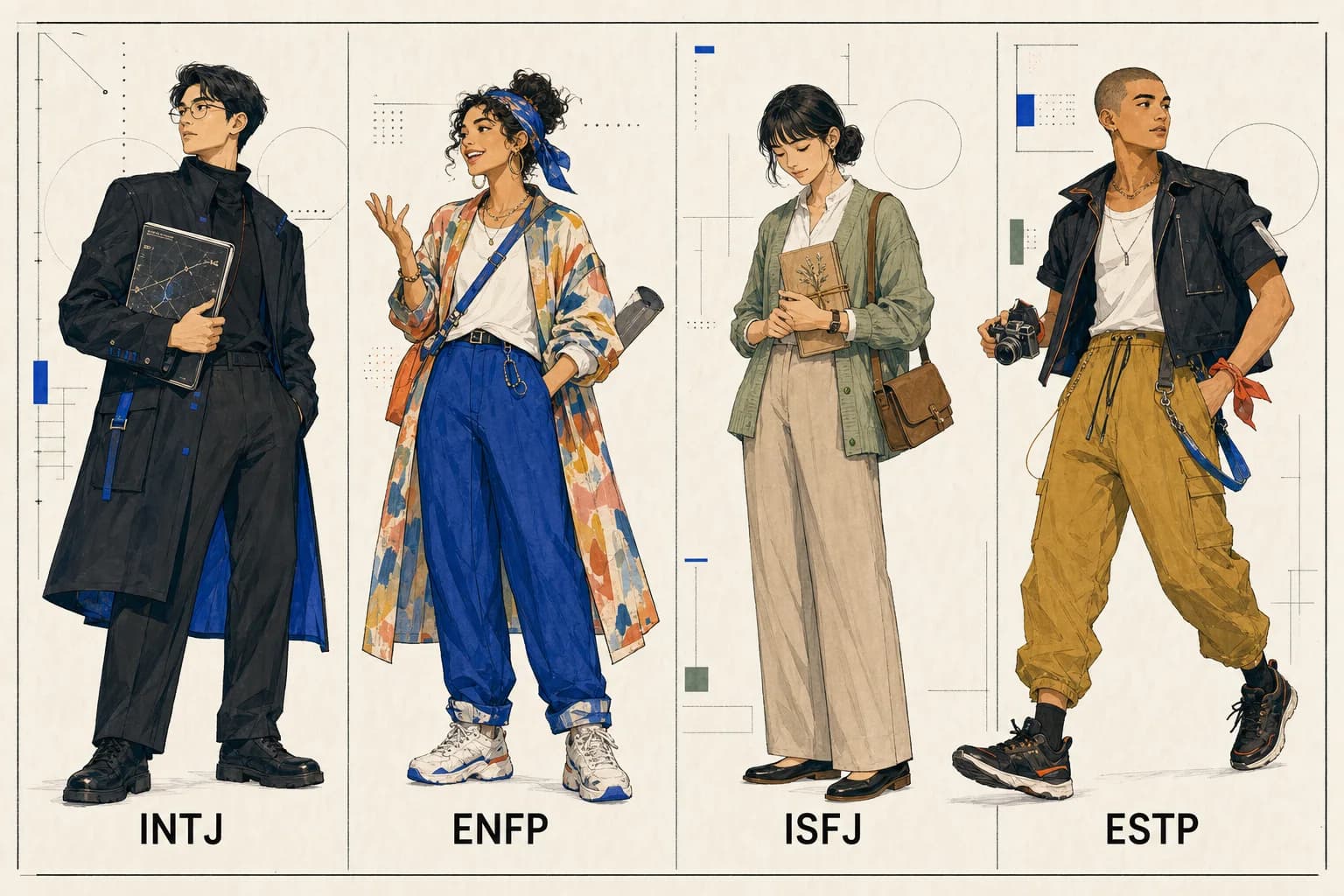
INTJ
You naturally turn complex possibilities into long-range systems. Independence and competence matter, and you prefer ideas that can survive close scrutiny.
INTP
You are energized by understanding how ideas fit together. You value intellectual freedom and often keep refining a model after others consider it finished.
ENTJ
You readily organize people and resources around a demanding objective. Clear standards, momentum, and measurable progress help you do your best work.
ENTP
You test assumptions by generating alternatives and arguing from unusual angles. Variety keeps you engaged, especially when a problem has no obvious answer.
INFJ
You look for the deeper pattern in people and situations, then try to move it toward a meaningful outcome. Your vision is often private but strongly held.
INFP
You navigate by an internal sense of meaning and possibility. Authenticity matters deeply, and your imagination often reveals humane alternatives others miss.
ENFJ
You notice what a group needs and naturally encourage people toward shared growth. You combine social energy with a strong desire for constructive impact.
ENFP
You connect people, ideas, and opportunities with contagious enthusiasm. Freedom and personal meaning keep you moving more than routine or convention.
ISTJ
You create reliability through careful preparation, clear standards, and follow-through. People often trust you with work where accuracy and continuity matter.
ISFJ
You support people through practical attention and a strong memory for what matters to them. Stability feels best when it also makes others feel cared for.
ESTJ
You bring structure to action and prefer responsibilities to be explicit. When a goal is concrete, you quickly identify what must happen next.
ESFJ
You build belonging through responsiveness, shared rituals, and practical care. Cooperation becomes easier when people feel seen and included.
ISTP
You stay calm around concrete problems and learn by testing how things work. Autonomy helps you respond quickly when circumstances change.
ISFP
You respond closely to the reality in front of you while protecting a personal set of values. Your creativity is often subtle, sensory, and sincere.
ESTP
You read immediate conditions quickly and prefer learning in motion. Pressure can sharpen your focus, especially when a practical opening appears.
ESFP
You bring warmth and immediacy to shared experiences. You notice what makes a moment vivid and often help others participate more freely.
BEFORE YOU BEGIN
No. This is an independent, entertainment and self-reflection questionnaire inspired by four widely discussed Jungian preference pairs. It is not published, reviewed, or endorsed by The Myers-Briggs Company.
Each answer adds a small amount toward one side of one preference pair. Twelve balanced statements contribute to each dimension. The four higher sides form your four-letter result.
Preferences are not perfectly fixed, and context affects self-report answers. A near-50/50 score is especially likely to switch. Look at the percentages before focusing on the label.
No. This test is not a clinical, diagnostic, or employment-selection instrument. Use it as a conversation starter for self-reflection.
MBTI® and Myers-Briggs Type Indicator® are trademarks of Myers & Briggs Foundation in the United States and other countries. PersonaQuiz is independent and is not affiliated with or endorsed by the Foundation or The Myers-Briggs Company.